Curating the dead

A state can keep a Holocaust museum and defend a man whose signature sits on a 1941 order concentrating Jewish people into a ghetto, and Lithuania does both without apparent strain. The Vilna Gaon State Jewish Museum in Vilnius runs a permanent exhibition on the murder of the country’s Jewish people. In the same years,…
August 21, 2026 · 6 min

War follows the ground

Humans have probably always killed one another. Warfare is something narrower. It implies groups, planning, logistics, memory, leadership, and enough social organisation that violence stops being a personal act and becomes a collective institution. The interesting question is not when humans first killed. It is when ki…

July 16, 2026 · 20 min

Peace has running costs

Organised violence tends to appear where the substrate makes it the higher-return move, and to recede where it does not. That is one way to read the origins of war. Inverted, the same reading yields a second claim, less obvious and more useful. If war is what the ground rewards under some conditions, then peace is what…

July 16, 2026 · 9 min

The naming and the finding out

At eight in the evening on 31 August 1939, a small team in Polish uniforms seized a radio transmitter at Gleiwitz in Upper Silesia and broadcast a few minutes of anti-German agitation. By the following morning the event had a name, an author, and a consequence: a Polish provocation, answered by the invasion that began …

July 8, 2026 · 23 min

Reading the envelope

Reading the Substrate argued that analysis of conflict tends to read a story first and the ground beneath it late, and that the ordering is often backwards in its emphasis: ideas set a conflict’s direction, conditions set its reach. That was a claim using looking backwards, about explaining wars that have already happe…

July 1, 2026 · 9 min
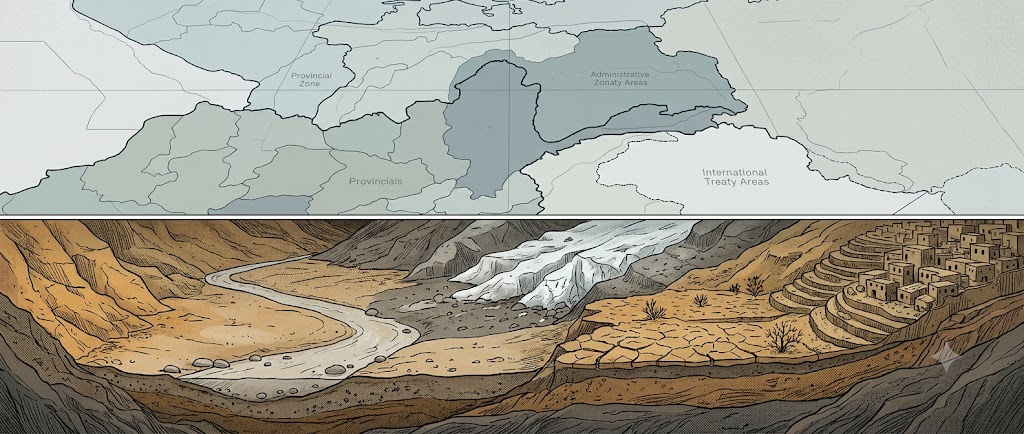
A stylised map of a contested border region shown above a cutaway cross-section of the ground beneath it. The upper map shows clean diplomatic borders and labels; the lower section reveals a dry riverbed, a retreating glacier, cracked farmland, and a crowded hillside, with a thin line dividing the two layers.

Reading the substrate

By the time a clash in the central Sahel reaches a wire service, it has already been given its name: a jihadist attack, or ethnic violence between Fulani herders and settled farmers, with the dead counted under one heading or the other. What rarely travels with the dispatch is the thing underneath it: a rainy season th…

June 30, 2026 · 21 min